
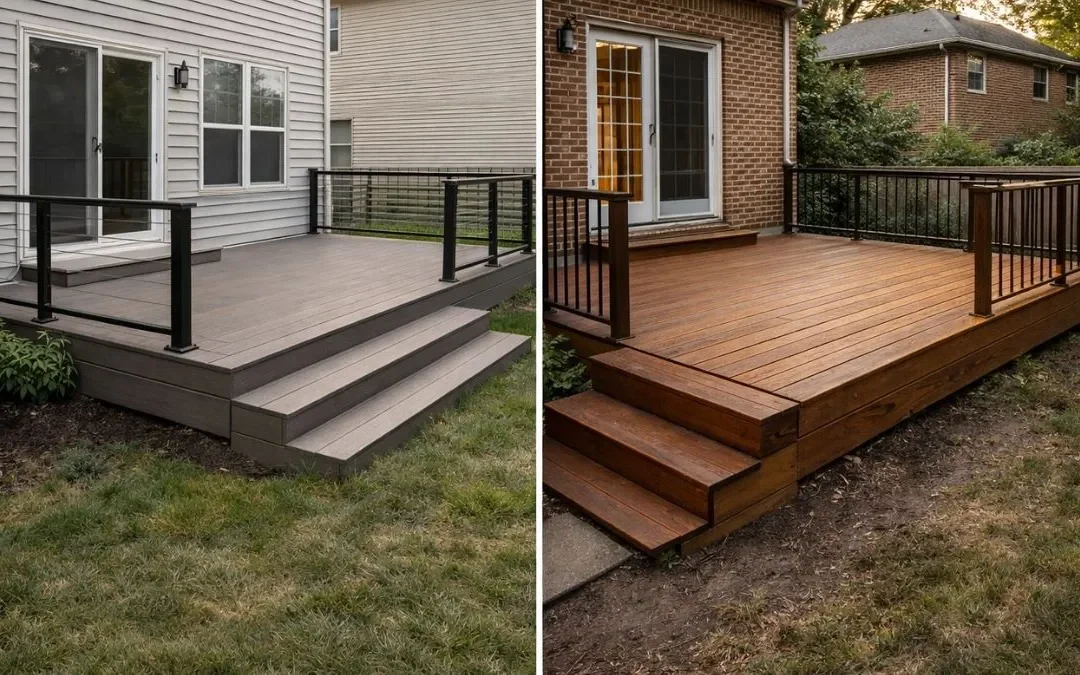
Outdoor living spaces continue to be a valuable upgrade for homeowners in Chicago. When planning a deck project, many homeowners compare composite decking vs wood decking to determine which material best fits their lifestyle, budget, and maintenance preferences. Each option offers distinct advantages, but they also respond very differently to Chicago’s changing climate.
Understanding long-term performance helps homeowners avoid costly repairs or replacements later. Snow, rain, freeze-thaw cycles, and summer heat place consistent stress on decking materials throughout the year. Choosing the right decking material helps ensure durability, safety, and comfort across all seasons.
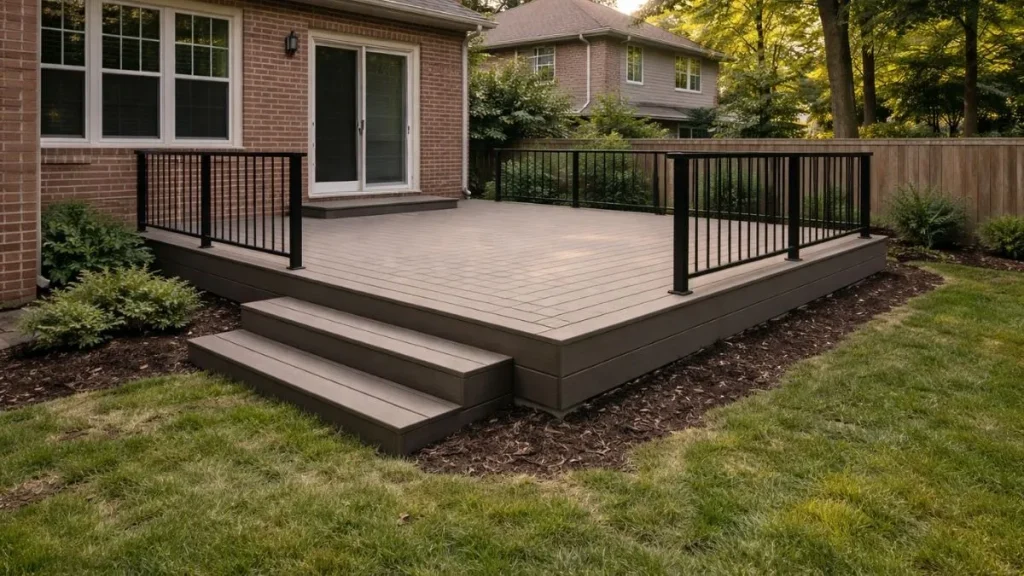
Composite Decking Benefits
Composite decking is engineered to resist moisture, fading, and rot, making it a strong choice for Chicago’s unpredictable weather. Unlike traditional wood, composite materials do not absorb water, which helps prevent warping and cracking during freeze-thaw cycles. This durability makes composite decking especially appealing for homeowners who want long-lasting outdoor spaces.
Another major advantage of composite decking is its low maintenance requirements. It does not need staining, sealing, or painting, and cleaning typically involves only soap and water. For busy homeowners or those who prefer minimal upkeep, composite decking provides peace of mind and consistent appearance year after year.
Composite materials also maintain color and structure more evenly over time. Many modern composite products are designed to resist UV damage, which helps prevent fading during long summer months. This consistency allows decks to retain a clean, finished look without frequent refinishing.
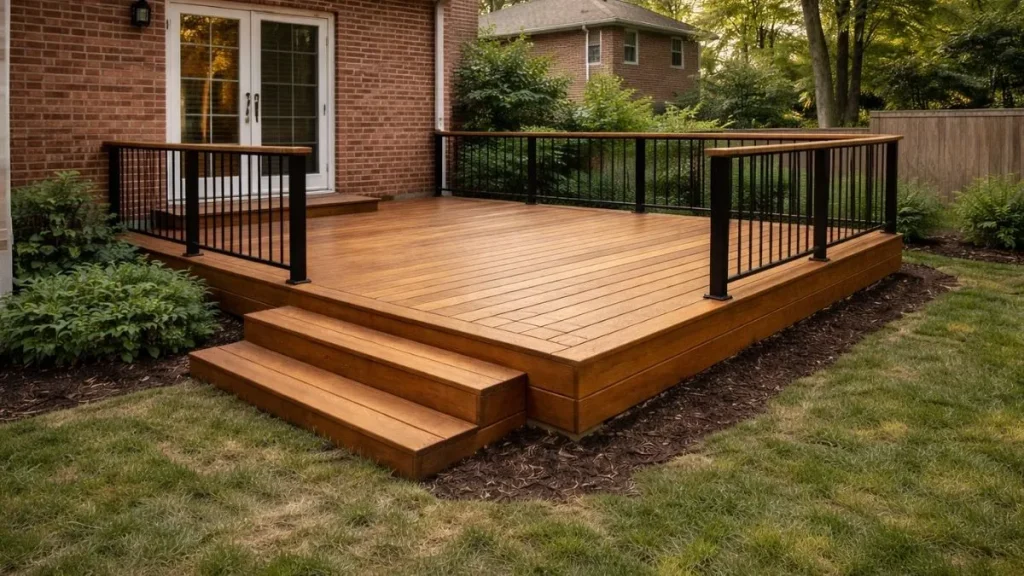
Wood Decking Appeal
Wood decking remains popular for its natural appearance and traditional charm. Many Chicago homeowners appreciate the warmth and character that real wood brings to outdoor spaces. Pressure-treated lumber and cedar are among the most common wood decking materials used in the area.
One of the main advantages of wood decking is its lower upfront cost. For homeowners working within a tighter budget, wood often provides an accessible entry point into deck construction. Wood is also easier to customize on-site, allowing for more flexibility in design details.
However, wood decking requires ongoing maintenance to withstand Chicago’s weather conditions. Exposure to moisture and temperature changes can cause wood to crack, fade, or rot if not properly cared for. Regular staining and sealing are essential to protect the surface and extend the deck’s lifespan.
For homeowners who enjoy hands-on maintenance, wood decking can still be a practical and attractive option. With consistent care, wood decks can remain functional and visually appealing for many years, even in challenging climates.
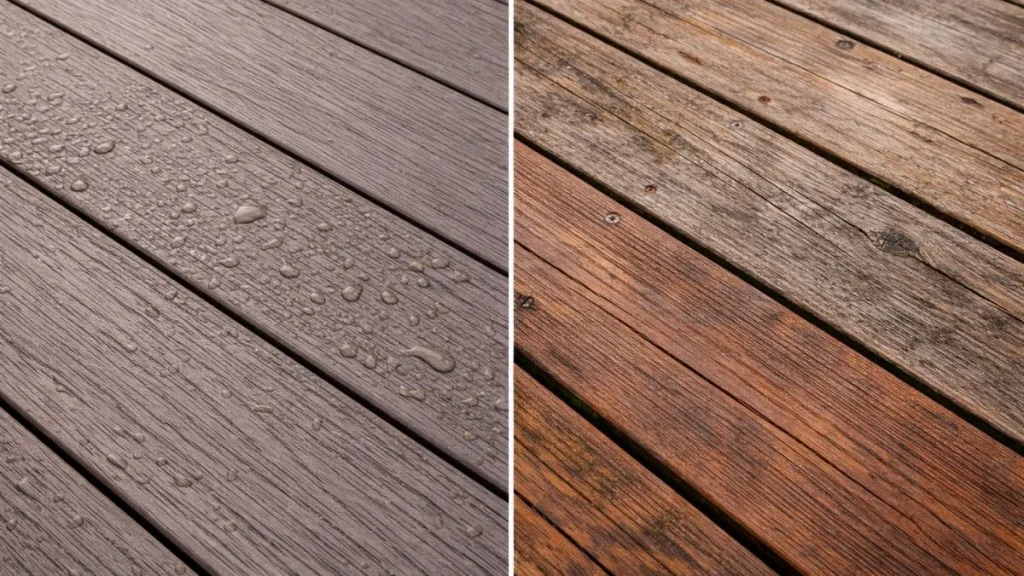
Maintenance and Long-Term Cost
When comparing composite decking vs wood decking, maintenance plays a major role in long-term cost. Wood decking often costs less at the time of installation, but maintenance expenses add up over time. Staining, sealing, and repairs become recurring costs that homeowners must factor into their budget.
Composite decking, while more expensive upfront, typically results in lower maintenance costs. The absence of routine sealing or staining saves both time and money. Over the lifespan of the deck, many homeowners find that composite decking offers better overall value despite the initial investment.
Long-term durability also affects replacement timelines. Composite decks often last longer with fewer structural issues, while wood decks may require board replacement or resurfacing sooner. Evaluating both short-term and long-term costs helps homeowners make a more informed decision.
Selecting the Right Decking Material
Selecting the right decking material depends on how the space will be used and how much maintenance homeowners are willing to handle. Families with heavy foot traffic, pets, or frequent gatherings may benefit from the durability of composite decking. Homeowners who prioritize natural aesthetics and hands-on care may prefer wood.
Local climate considerations should always guide material selection. Chicago’s freeze-thaw cycles, snow accumulation, and summer heat place unique demands on outdoor structures. Choosing materials designed to perform in these conditions helps protect the investment.
Before committing to a decking material, it helps to consult an experienced professional. Budget Construction Company can explain material differences, project timelines, and pricing based on your specific property and usage needs. A free deck estimate also allows homeowners to plan confidently before construction begins.